
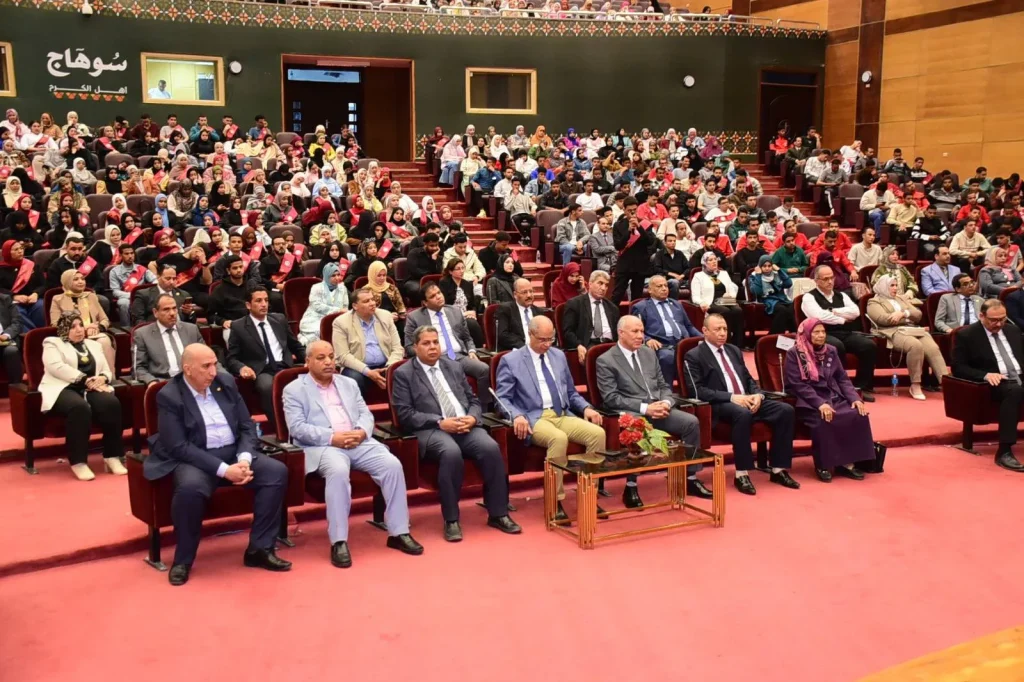
Dr. Hassan El-Noumani, President of Sohag University, announced that the Fourth International Environmental Conference, organized by the university, concluded with a set of key recommendations during its closing session. Foremost among these recommendations was the immediate implementation of a comprehensive action plan to transform Sohag University into a “Green University,” making the campus a living model of sustainability through efficient energy management, rational water consumption, and environmentally safe waste management.
The conference also recommended establishing a specialized institutional body within the university dedicated to environmental sustainability. This entity would be responsible for planning, monitoring implementation, and periodically assessing the impact of sustainability initiatives. In addition, the recommendations emphasized the adoption of modern technologies, including artificial intelligence (AI) and Geographic Information Systems (GIS), to monitor and analyze environmental challenges and support evidence-based decision-making.
Dr. Khaled Omran, Vice President for Community Service and Environmental Development and President of the Conference, stated that the conference further recommended redirecting research priorities toward addressing real-world environmental challenges, ensuring that scientific research outcomes are translated into practical, implementable solutions.
The conference also called for the launch of sustainable community-based environmental initiatives targeting villages and underserved areas to raise environmental awareness and promote positive environmental behaviors. It recommended integrating sustainability concepts and environmental awareness into academic curricula across all disciplines in order to prepare graduates equipped with both environmental knowledge and responsible environmental practices.
Furthermore, the conference emphasized the importance of supporting green economy projects and environmental entrepreneurship while encouraging innovation in clean energy, recycling, and sustainable development. It also recommended strengthening partnerships with government institutions, the private sector, and civil society organizations to transform the conference recommendations into practical programs and projects.
Among the key recommendations was the organization of integrated community outreach convoys—including medical, veterinary, agricultural, and awareness services—to serve local communities, with particular emphasis on environmental protection and public health.